

Where Is the Best Place to Open a Company in Europe in 2026? Comparison of 9 Countries for Entrepreneurs
13
Oct
- Reading time: 4 min.

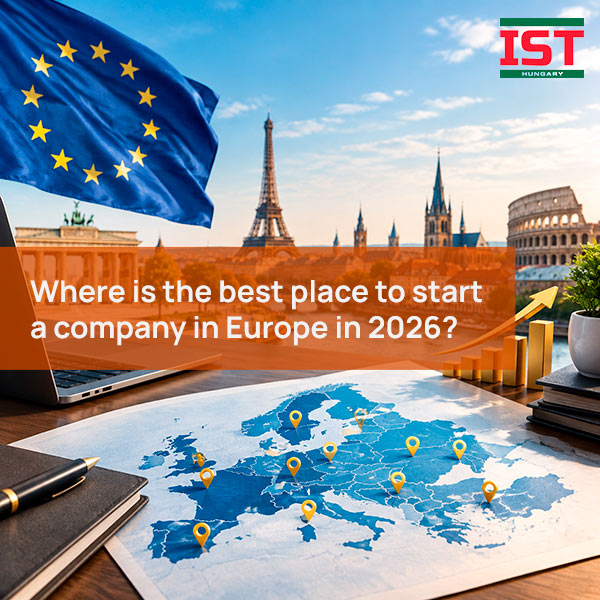
Choosing a country to open a company in Europe is not just a question of tax rates. It is a strategic decision that depends on your goals: whether you want to obtain a residence permit, conduct international trade, optimise taxes, or simply have a European legal address.
In this article, we compare nine popular jurisdictions: Hungary, Germany, Italy, Spain, Serbia, Cyprus, Montenegro, Malta and Portugal. The comparison covers the key criteria, including taxes, registration speed, and opportunities for obtaining a residence permit, permanent residence and citizenship.
IST Hungary is a Hungarian consulting company with its head office in Budapest. We have offices in 12 countries worldwide, which allows us to support clients at every stage, from choosing a jurisdiction to obtaining a residence card.
Comparative Table: Taxes and Business Conditions (2026)
| Country | Corporate Tax | VAT | Registration Time | Residence via Company | Permanent Residence | Citizenship |
|---|---|---|---|---|---|---|
| Hungary | 9% | 27% | 15 working days | Yes, up to 4 years | 3 years | 8 years |
| Germany | ~30% | 19% | 2–4 weeks | Limited | 5 years | 8 years |
| Italy | 24% | 22% | 1–2 weeks | Difficult | 5 years | 10 years |
| Spain | 25% (15% startups) | 21% | 1–4 weeks | Yes, but difficult | 5 years | 10 years |
| Serbia | 15% | 20% | 1–5 days | Yes, up to 3 years | 5 years | 8 years |
| Cyprus | 12.5% | 19% | 1–2 weeks | Yes | 5 years | 7 years |
| Montenegro | 15% (9% small) | 21% | 1–2 weeks | Yes | 5 years | 10 years |
| Malta | 35% (effectively ~5%) | 18% | 2–4 weeks | Yes | 5 years | 5 years |
| Portugal | 21% (17% small) | 23% | 1–2 weeks | Yes, but slow | 5 years | 10 years |
Hungary: The Lowest Tax Rate in the EU
Hungary is the absolute leader in corporate tax with a rate of just 9%, the lowest in the European Union. For companies operating in international markets, this provides significant savings.
Key features:
- Company registration (Kft) takes 15 working days through the electronic one-stop-shop system
- Minimum share capital for a Kft is 3 million forints (approximately 7,700 euros)
- Hungary does not levy withholding tax on dividends, interest and royalties paid to foreign companies, which makes it an attractive holding jurisdiction
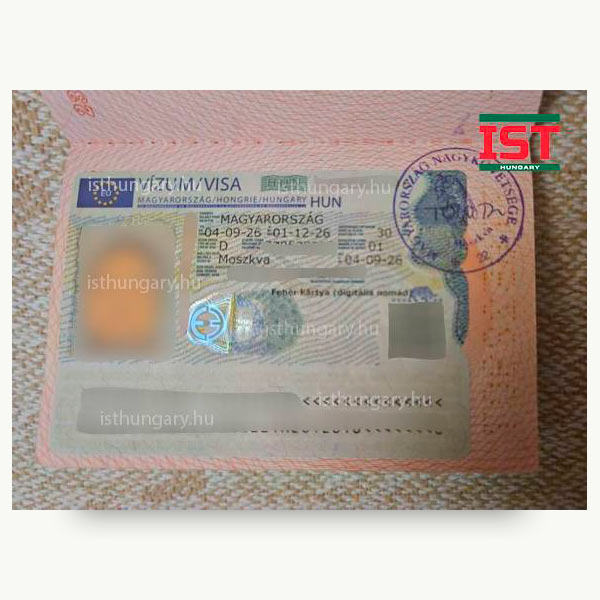
Residence via company: yes, opening a company gives the right to obtain a residence permit for up to 4 years for founders and family members.
Path to permanent residence and citizenship:
- Permanent residence after 3 years of legal residence
- Citizenship after 8 years of legal residence (with a mandatory Hungarian language exam)
Who it suits: export-oriented companies, IT businesses, holdings, and entrepreneurs who want to minimise taxes and obtain a European residence permit.
Germany: The Largest Market, but High Bureaucracy
Germany offers access to the largest economy in Europe and highly qualified talent. However, doing business here requires patience.
Taxes: the corporate tax rate is 15%, but including the trade tax (Gewerbesteuer) and solidarity surcharge, the total burden reaches ~30%. From 2028 the rate will gradually decrease by 1 percentage point per year, reaching 10% by 2032.
Registration: takes 2–4 weeks and requires interaction with the tax office, trade authority and other bodies.
Residence via company: possible, but the process is complex and requires proof of the economic significance of the business.
Path to permanent residence and citizenship:
- Permanent residence after 5 years of legal residence
- Citizenship after 8 years (requires knowledge of German and renunciation of previous citizenship in most cases)
Who it suits: companies targeting the German market, industrial production, and R&D projects.
Italy: New Incentives for Investment
In 2026, Italy launched a large-scale programme of tax incentives for business.
Taxes: the base rate is 24%. For investments in new equipment, a “hyper-depreciation” regime has been introduced: the tax base can be increased by 180% for investments up to 2.5 million euros.
For small business: the rate is 15% on the first 85,000 euros of income under the simplified regime (regime forfettario), and for startups 5% for the first 5 years.
Registration: 1–2 weeks, but bureaucracy remains complex.
Residence via company: possible, but the process is lengthy and requires significant investment.
Path to permanent residence and citizenship:
- Permanent residence after 5 years of legal residence
- Citizenship after 10 years (requires knowledge of Italian)
Who it suits: manufacturing companies, startups, and businesses ready to invest in equipment.
Spain: Startup Visas and Low Taxes for New Companies
Spain actively supports entrepreneurs through the Startup Act (Ley de Startups).
Taxes: the base rate is 25%. For startups 15% for the first 4 profitable years. For micro-enterprises (turnover up to 1 million euros) 21% on the first 50,000 euros of profit.
Registration: possible remotely, takes 1–4 weeks.
Residence via company: there is a special startup visa, but ENISA certification is required.
Path to permanent residence and citizenship:
- Permanent residence after 5 years of legal residence
- Citizenship after 10 years (requires knowledge of Spanish; Spain does not recognise dual citizenship with Russia)
Who it suits: technology startups, IT companies, and businesses focused on the Spanish-speaking market.
Serbia: Fast Registration and Low Taxes
Serbia is a popular destination for entrepreneurs from the CIS thanks to the simplicity of doing business.
Taxes: corporate tax 15%. For large investors (100+ employees, investments from 8.5 million euros), 10-year tax holidays are available.
Registration: fully online, takes 1–5 days.
Residence via company: yes, it is possible to obtain a temporary residence permit for up to 3 years through establishing a company.
Path to permanent residence and citizenship:
- Permanent residence after 5 years of legal residence
- Citizenship after 8 years (requires knowledge of Serbian)
Who it suits: IT companies, startups, and entrepreneurs who want to start a business in Europe quickly and inexpensively.
Cyprus: Low Tax and English Law
Cyprus is a classic jurisdiction for international business.
Taxes: corporate tax 12.5%, one of the lowest in the EU.
Advantages: English common law, a developed banking system, and access to the EU market.
Residence via company: yes, it is possible to obtain permanent residence through investment or a company.
Path to permanent residence and citizenship:
- Permanent residence after 5 years of legal residence
- Citizenship after 7 years (requires knowledge of Greek)
Who it suits: holdings, financial companies, and IT businesses working with the EU.
Montenegro: Low Taxes and Fast Residence
Montenegro offers attractive conditions for small and medium-sized businesses.
Taxes: corporate tax 15%, but for small enterprises (turnover up to 100,000 euros) 9%.
Registration: 1–2 weeks.
Residence via company: yes, possible.
Path to permanent residence and citizenship:
- Permanent residence after 5 years of legal residence
- Citizenship after 10 years (requires knowledge of Montenegrin)
Who it suits: tourism businesses, real estate, IT companies, and entrepreneurs seeking access to the Adriatic.
Malta: Effective Tax Rate of ~5%
Malta is a popular jurisdiction for international tax planning.
Taxes: the nominal rate is 35%, but thanks to the tax refund system, the effective rate is about 5%.
Registration: 2–4 weeks.
Residence via company: yes, there are programmes for investors and entrepreneurs.
Path to permanent residence and citizenship:
- Permanent residence after 5 years of legal residence
- Citizenship after 5 years (Malta offers one of the fastest naturalisation programmes in the EU, subject to investment)
Who it suits: holdings, trading companies, and businesses working with the EU.
Portugal: Access to the EU and a Startup Ecosystem
Portugal has become the centre of Europe’s startup ecosystem.
Taxes: corporate tax 21%, for small enterprises 17% on the first 50,000 euros.
Registration: 1–2 weeks.
Residence via company: possible, but the process can be lengthy.
Path to permanent residence and citizenship:
- Permanent residence after 5 years of legal residence
- Citizenship after 10 years (requires knowledge of Portuguese)
Who it suits: IT companies, digital nomads, startups, and businesses that value quality of life.
Which Country to Choose? Recommendations by Goals
- If your goal is minimal taxes: choose Hungary (9%) or Malta (effectively ~5%)
- If your goal is fast residence via business: choose Hungary (up to 4 years) or Serbia (up to 3 years)
- If your goal is fast citizenship: choose Malta (5 years) or Cyprus (7 years)
- If your goal is access to the largest EU market: choose Germany or Spain
- If your goal is a startup ecosystem: choose Spain (Ley de Startups) or Portugal
- If your goal is simplicity and speed of registration: choose Serbia (1–5 days)
How Can IST Hungary Help?
IST Hungary is a Hungarian consulting company with its head office in Budapest. We have offices in 12 countries worldwide, which allows us to support clients at every stage, from choosing a jurisdiction to obtaining a residence card.
We offer:
- Consultation on choosing the optimal jurisdiction for your business
- Company registration in Hungary and other countries
- Assistance with opening bank accounts
- Support in obtaining a residence permit through opening a company
- Full case management, from idea to receiving the residence card
Contact us for a consultation.
This article is for informational purposes only and does not constitute legal or tax advice. Tax legislation may change. For up-to-date information and individual advice, please contact the specialists at IST Hungary.
IST Hungary –
is a Hungarian consulting company trusted by clients from all over the world!
Our contacts:
📲 Phone: +36205977777
Write to us in Telegram
Write to us in What’s App
📧 E-mail: office@isthungary.hu
🌐 Website: https://isthungary.hu/
📍For the business meeting in Budapest in Hungary:
1061, Budapest, Király u. 26, Hungary









 Hungary
 Andorra
 Bulgaria
 Croatia
 France
 Greece
 Italy
 Portugal
 Qatar
 Republic of Serbia
 Slovak Republic
 Slovenia
 Spain
 Switzerland
 UAE
 United Kingdom
 Antigua and Barbuda
 Austria
 Dominica
 Grenada
 Vanuatu
 Malta
 Nauru
 Saint Lucia
 Sao Tome and Principe
 Turkey

 Cyprus
 USA


